Featured
Type or Interface For Typescript Projects ?
Discover why I prefer type over interface in TypeScript! This post dives into its flexibility and practical advantages, helping you write cleaner, more efficient code. 🚀
A
Written byasta-nguyen
04 May 20252 min read675 views
#Why You Should Use Type Instead of Interface in TypeScript
TypeScript provides two main ways to define the shape of an object: type and interface. While both can be used interchangeably in many cases, there are specific scenarios where type offers more flexibility and power. This blog will explore these scenarios and explain why you might prefer type over interface.
Key Differences:
#1. Union Types
type can define union types, which an interface cannot.
Code
Loading…
#2. Intersection Types
type can define intersection types.
Code
Loading…
#3. Primitive Types
type can alias primitive types.
Code
Loading…
#4. Tuples
type can define tuples
Code
Loading…
#5. Mapped Types
type can create mapped types
Code
Loading…
#6. Complex Type Constructs
type can define more complex type constructs like conditional types.
Code
Loading…
Let's consider a React component where we define the props using type instead of interface.
#7. Union Types in React component
Code
Loading…
#8. Intersection Types in React component
When you need to combine multiple types, the type is more flexible.
Code
Loading…
#9. Tuples in React component
When you need to define a tuple type, type is the only option.
Code
Loading…
Using interface (Not Possible)
#10. Mapped Types in React component
When you need to create a mapped type, type is more suitable.
Code
Loading…
Using interface (Not Possible)
Code
Loading…
#Conclusion
While interface is useful for defining object shapes that are intended to be extended or implemented by classes, type offers more versatility and power for defining complex types. By understanding the type's strengths, you can make more informed decisions in your TypeScript projects.
In summary, use type when you need:
•
Union types
•
Intersection types
•
Primitive type aliases
•
Tuples
•
Mapped types
•
Complex type constructs like conditional types
This flexibility makes type a better choice in many scenarios.
Filed under
LanguageTypescriptJavascript
A
View all postsAbout the author
asta-nguyen
Sharing ideas and building in public.
Loading comments...
Keep reading
More from asta-nguyen
 Backend
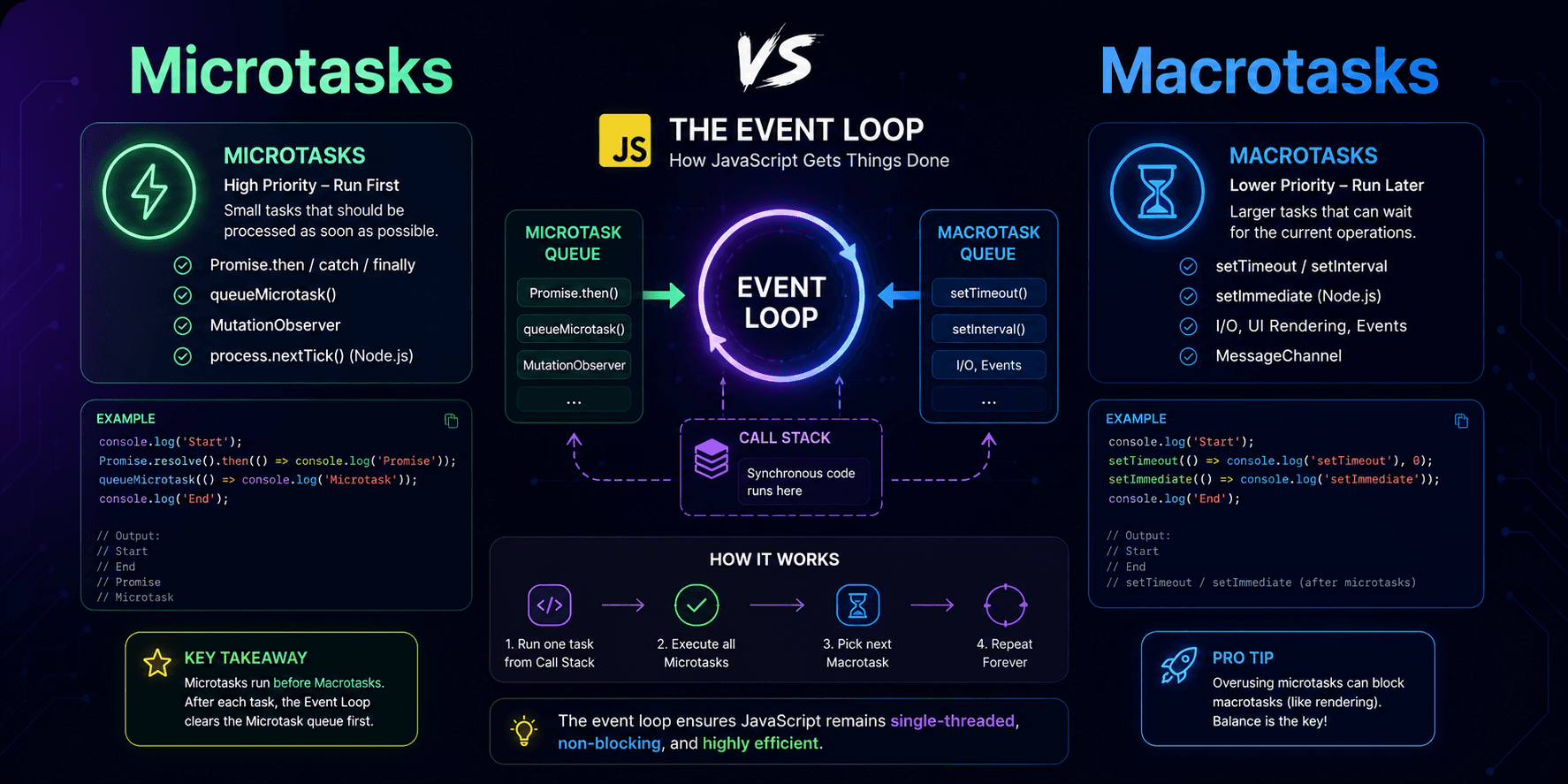
JavaScript Microtasks and Macrotasks: A Practical Guide to the Event Loop
This article explains JavaScript microtasks and macrotasks in practical terms, showing why `Promise.then()` usually runs before `setTimeout(..., 0)` and how the event loop prioritizes different kinds of asynchronous work.
A1 min